
The Friendly Interrogation
How “Pretexting” turns a thirty-second chat into a security breach.

THE COUNTERMEASURE
Dispatch #031
Think about the last time you met a friendly stranger at a dog park, a terminal gate, or a hotel bar. They were easy to talk to. They listened well. You walked away thinking, “What a nice person.”
To a hacker like Niko Webb, that wasn’t a “nice chat.” It was Elicitation.
Pretexting is the act of creating an invented scenario (the pretext) to engage a target and gently pull out sensitive information. While you think you are just swapping stories about your first car or your favorite childhood pet, Niko is actually filling out the “Password Reset” form for your primary email account in his head.

The Tradecraft: The “Elicitation” Loop
A master social engineer doesn’t ask direct questions. Direct questions trigger our “defense” instinct. Instead, Niko uses these three psychological hooks:
The False Statement: This is the most effective trick in the book. Niko might say, “I heard this building was originally a textile mill back in the 60s, right?” Your natural urge to correct someone is stronger than your urge to stay silent. You might respond, “Oh no, it was a bank vault until 1982.” You just gave him a massive piece of structural intel without being asked.
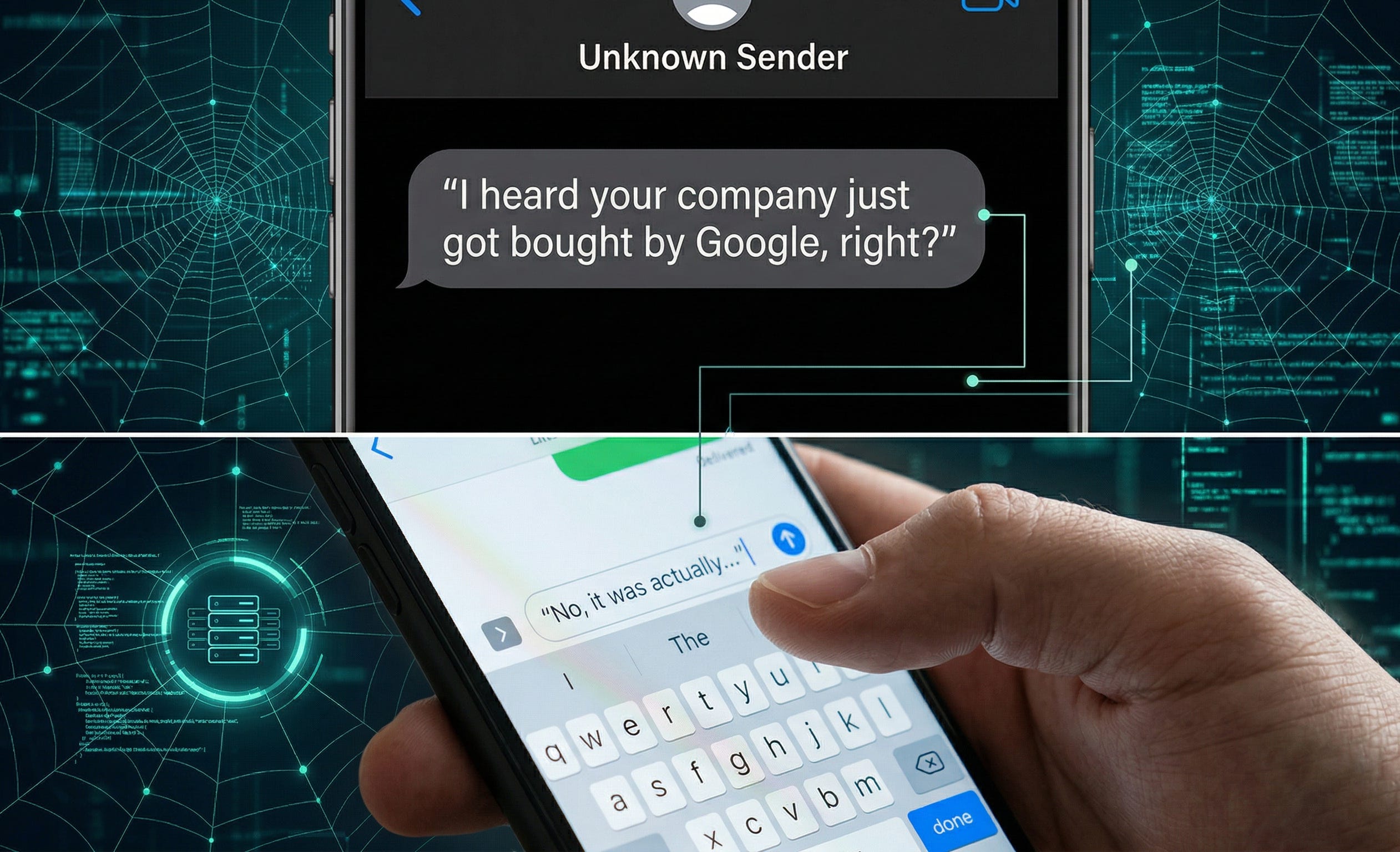
The Mutual Grievance: He finds something to complain about that you both share: the slow elevator, the bad coffee, or the confusing parking garage. Complaining creates an instant “us vs. them” bond. Once you are on the same “team,” your guard drops.
The “Quid Pro Quo”: Niko offers a small, seemingly personal detail first. He might mention his hometown or the name of his first dog. Because of the Rule of Reciprocity, you feel a subconscious pressure to share a similar detail about yourself to keep the social balance.
The “So What?”
You might think your “first concert” or your “hometown” is useless info. To a hacker, these are the Master Keys of the Internet.
The Security Question Bypass: Almost every major website (banks, email, social media) uses the same five or six “Security Questions” for password recovery. If Niko knows where you went to high school and your mother’s maiden name, he can “recover” your account and lock you out in seconds.
The “Whaling” Hook: If Niko is targeting an executive, he uses these small details to make a future phishing email look 100% authentic. If he knows you are frustrated with the “parking garage renovation” because you mentioned it at the bar, he can send an email as “Building Management” with a malicious link that you will click without thinking.
The Trust Anchor: Once he has a few personal details, he can call your assistant or a coworker and say, “Hey, I was just talking to [Your Name] about their old high school in Ohio, and they mentioned I should check in with you about the Q4 report.” The assistant trusts him because “only a friend” would know that specific detail.
The Countermeasure: Professional Boundaries
The “Stranger Danger” for Data: Be friendly, but be vague. You can talk about the weather or the game without revealing the name of your street or your children’s names.
Audit Your “Answers”: Look at your bank and email security questions. If the answers are things you might mention in a casual chat, change them. Better yet, use a Password Manager to generate a random string of text as the “answer.” (Example: Question: “First pet?” Answer: kj89!#fL).
The “Correction” Pause: Be mindful of the urge to correct people. If a stranger says something wrong about your company or your history, just nod and move on. You don’t owe them the truth.
The Sign-off
Rapport is a beautiful thing, but it is also a weapon. If a conversation feels “too easy,” take a second to ask yourself what you’ve just traded away for that comfort.
Next week in The Art of the Social Engineer, we are looking at The Tech Support Scam (The Voice of Urgency). I will show you how Niko uses “Artificial Crisis” to get you to disable your own antivirus software.
Stay dangerous,
Alex Holt
Detailed tradecraft.